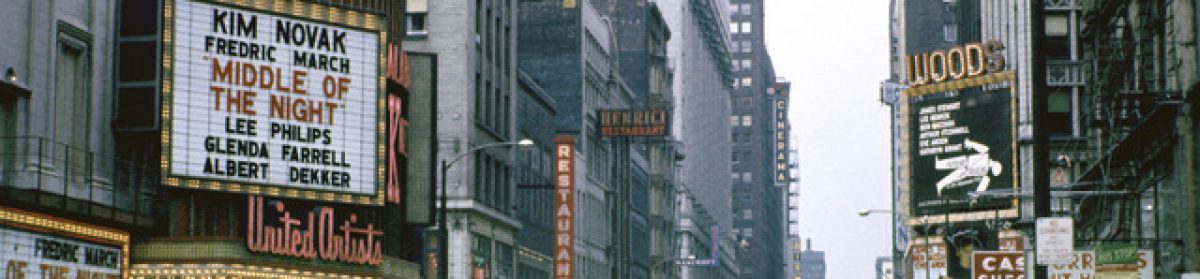

When the news came out that Cinema 1,2,3 on Third Avenue was permanently closing last week, there was much shock expressed. Personally, my reaction was more resigned, tinged with some nostalgia. For a very long time, I was convinced that the theater’s demise was inevitable. That piece of land–across the street from Bloomingdales–was just too valuable to remain as a triplex movie theater. So as much as the pundits will try to frame this as another in a long string of closures signaling the end of the theatrical movie business, it’s actually a real estate story.
I have every reason to be sad about this particular theater’s fate. When I worked for Don Rugoff in the 1970’s, I spent countless hours there, either to see whatever was playing or at our morning acquisition screenings. Every Friday, Bea Brydson, who was our office manager, would roam the halls and hand out four passes that were good for any showing at any of the Cinema 5 theaters. When I started the job, Robert Altman’s “Nashville” was playing at Cinema 2, and I was smitten. I used my passes week after week to see it again and again at what was a perfect venue for a widescreen film that had a multi-channel soundtrack.
My love affair with the Cinema 1 & 2 theaters continued throughout my many incarnations in the distribution business. At U.A. Classics, and later at Cinecom and Fine Line, many of our films had their exclusive first runs at these theaters. And we had many memorable premieres at what were considered at the time to be the most prestigious theaters in Manhattan. One of my favorites was the premiere of the director’s cut of Martin Scorsese’s “New York, New York,” which was not only attended by Marty and the cast of the film, but also, quite weirdly, by Jerry Lewis and the members of The Clash.
When I posted my thoughts about the closure last week, there were folks who pushed back, saying that the theaters were nothing special, and questioning my portrayal of them as being significant. These folks were clearly not around in the theaters’ heyday. To put things in proper perspective, permit me to offer up a bit of history.
Cinema 1 and 2 was Don Rugoff’s brainchild. He had inherited his dad’s business, called Rugoff and Becker Theaters, which was already operating a chain of prestigious theaters on the East Side. But Cinema 1 & 2 was the first theater he was involved in from its inception. This theater was Rugoff’s chance to express his personal interest in art and architecture and demonstrate his “sixth sense” about where the movie business was headed at the time. Interestingly, I believe that the financing to build the theater came from Richard Rogers of Rogers and Hammerstein fame.

While there had been existing theaters that had been divided into two screens, Cinema 1 and 2 was the first “purpose built” facility of its kind. The design was in the mid-century international style, and had similarities to Lincoln Center, which was built around the same time. Cinema 1 and 2 (there were originally only those two) had separate lobbies, separate marquees, and were built one atop the other. The smaller one was used for artier films and the larger one for Hollywood’s more prestigious films. Sometimes a commercial film would play on both screens; showtimes would be staggered so there were practically continuous showings.
The building itself was a work of art. The horizontal structure was divided up by vertical glass panels, topped by striking blue mosaic tiles. Display cases for each of the theaters were deep enough that three-dimensional displays could be created for the films that played there.
The lobbies were similarly distinctive. They were decorated with original pieces of modern art, and there were sitting alcoves with custom built furniture. There was no traditional candy counter; instead, there was cappuccino and baked goods sold from a subtle alcove. The upstairs lobby was dominated by a series of impressive chandeliers behind which, through the glass, there was a clear view of Bloomingdales across the street.
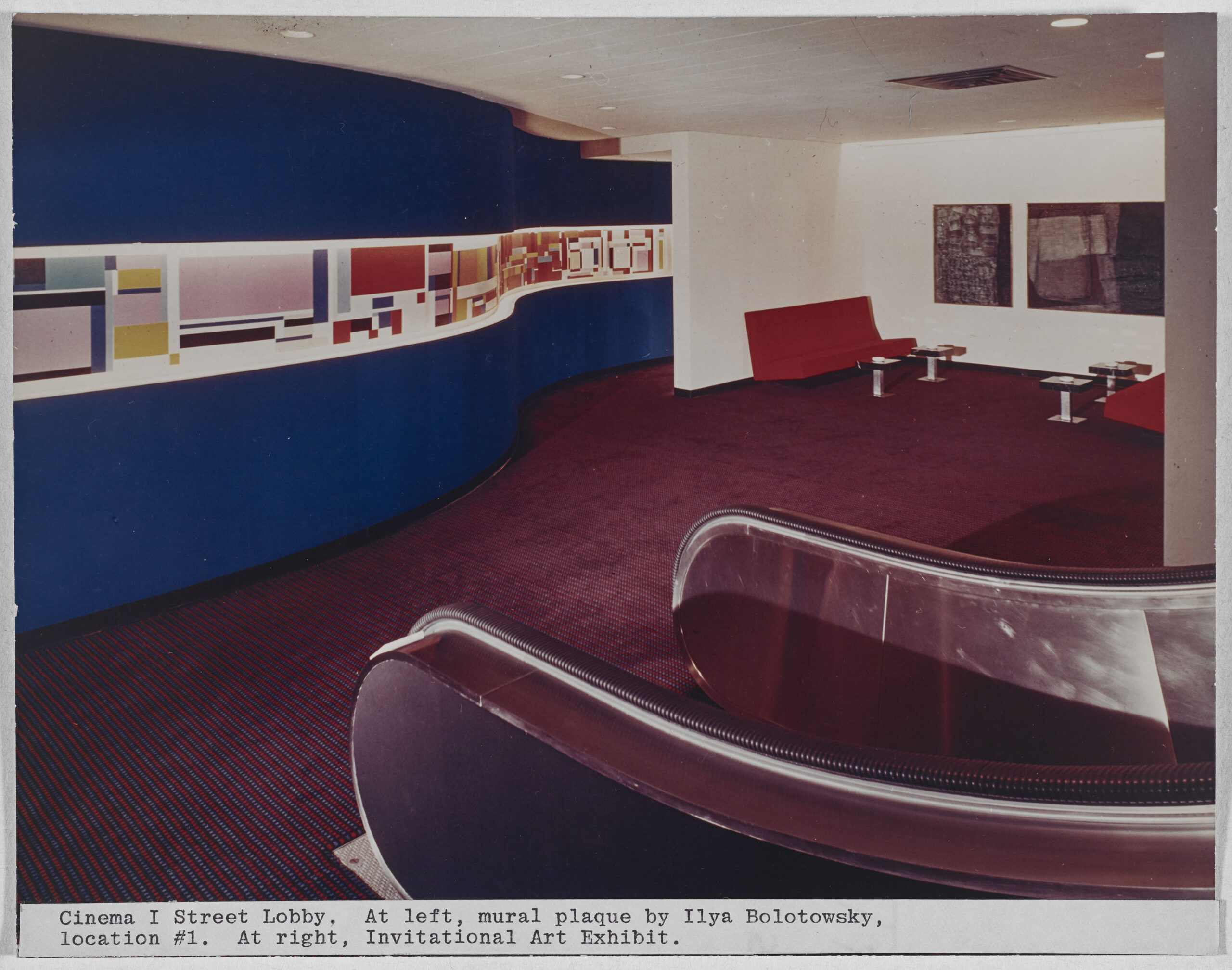
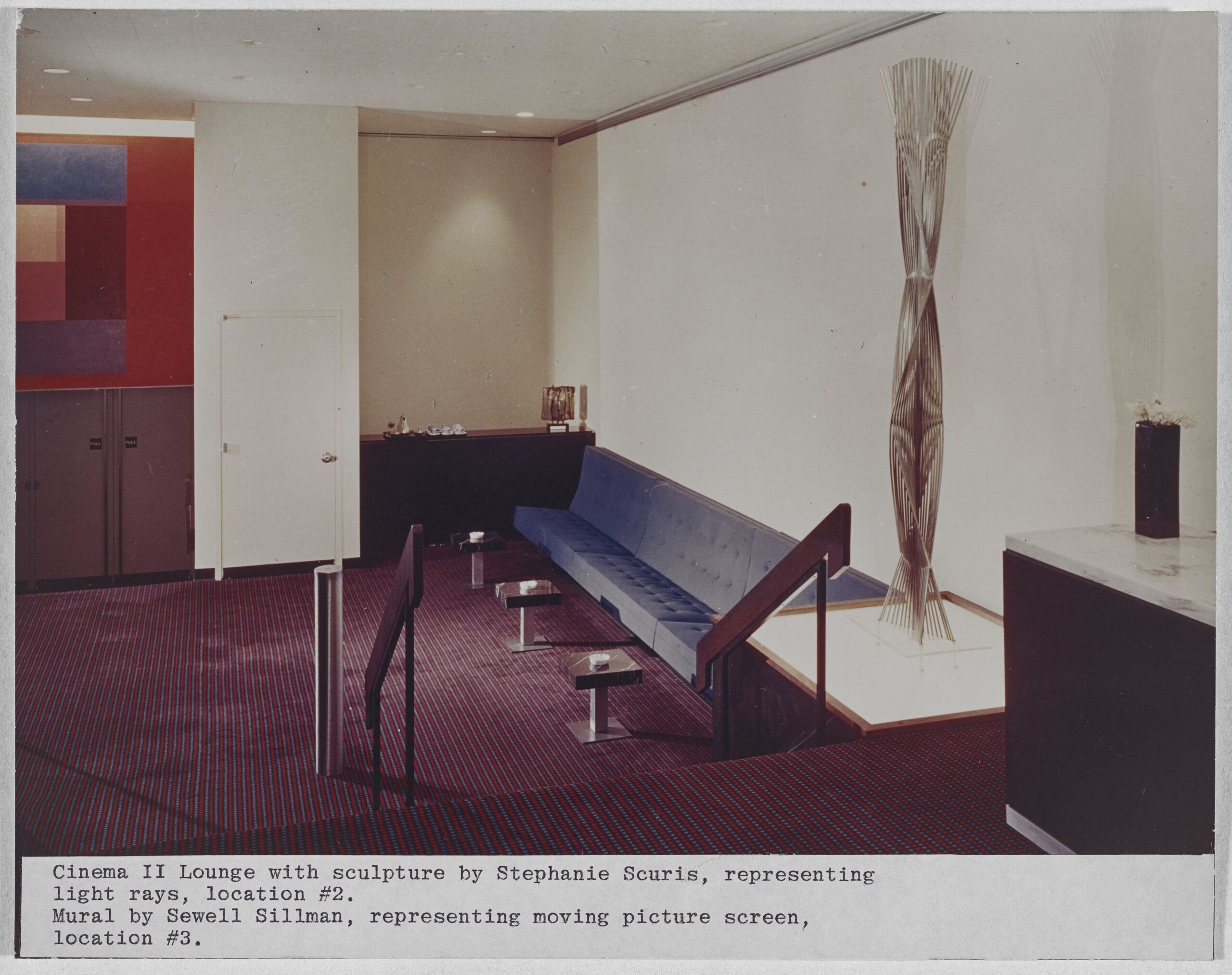
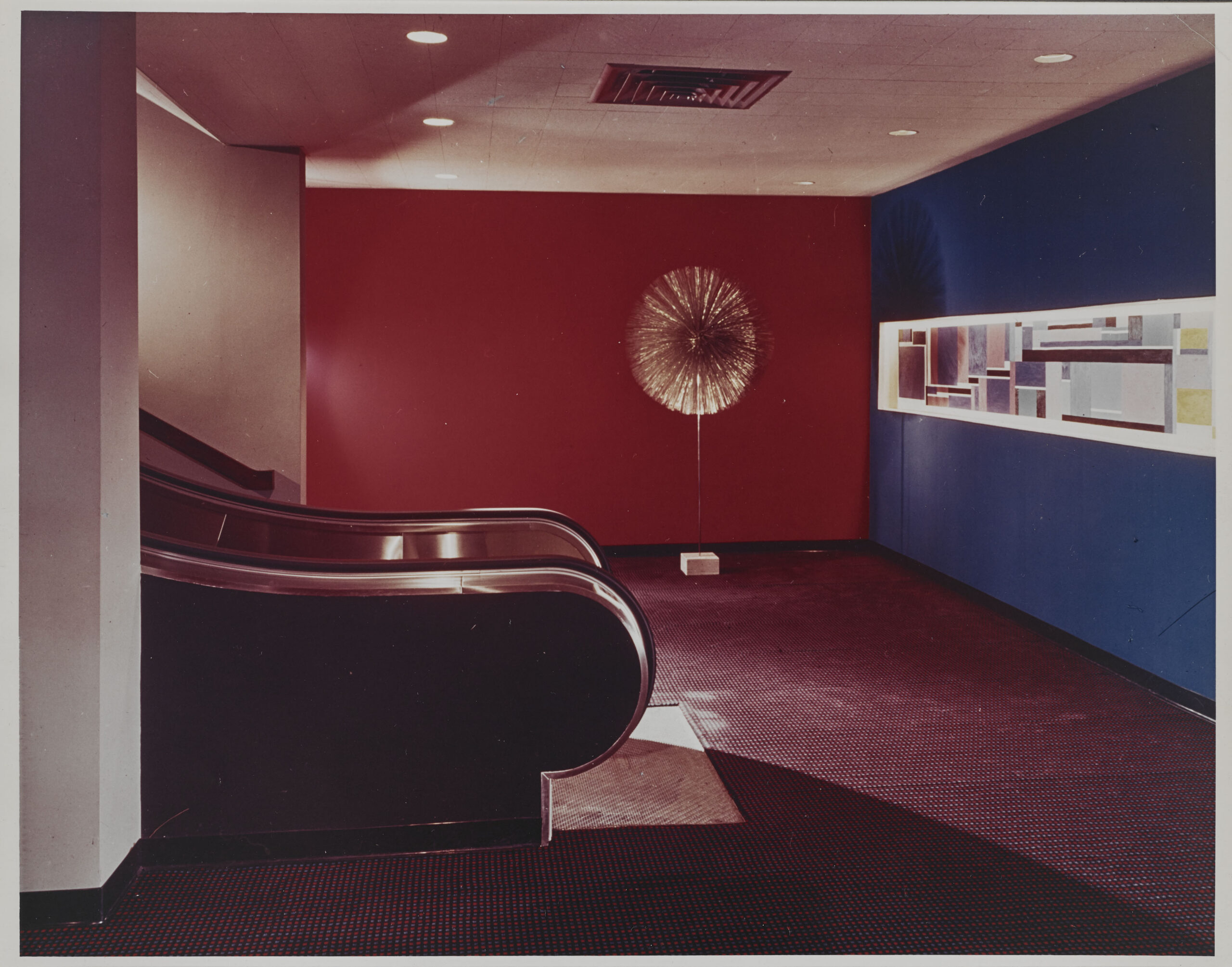
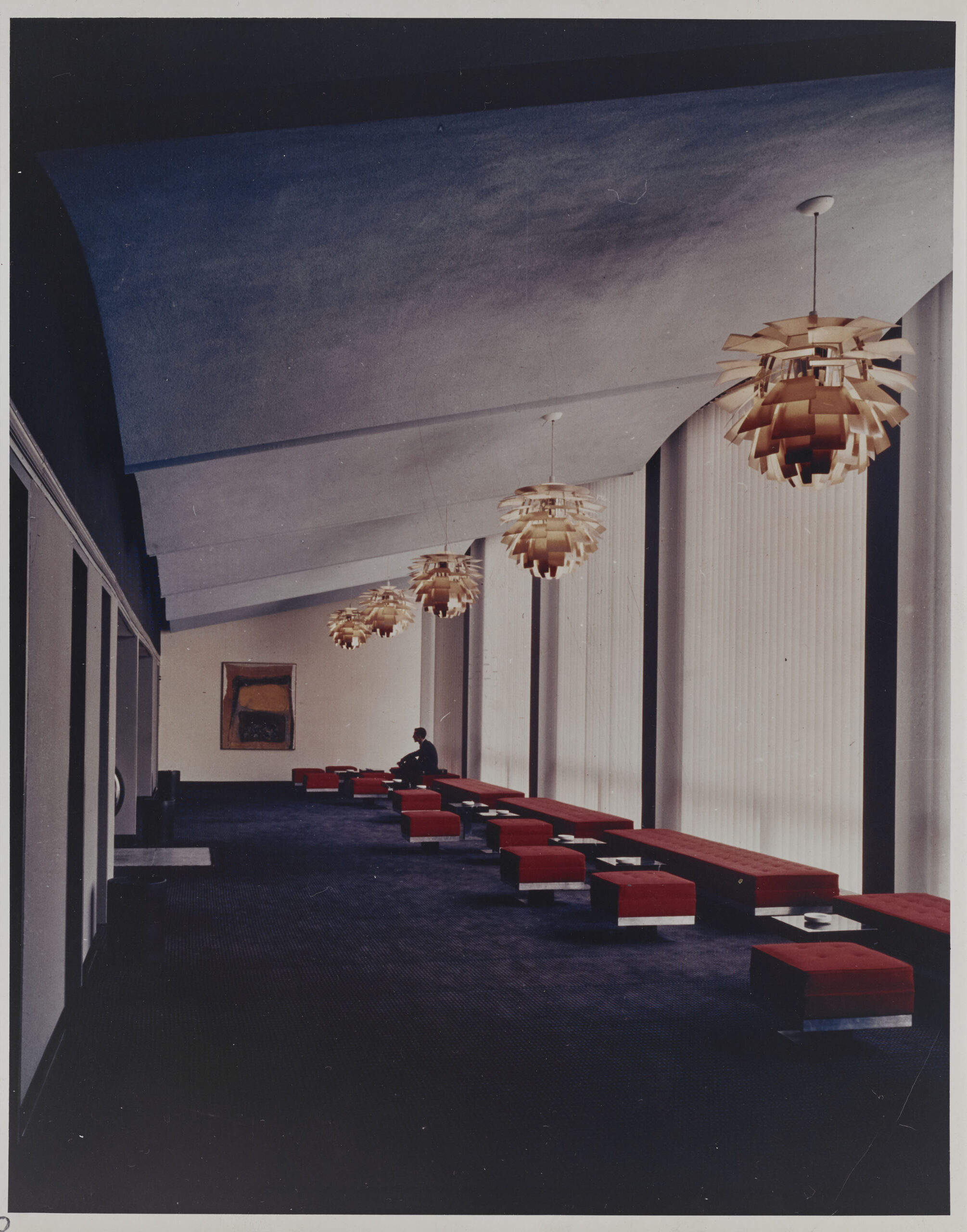
The entire effect was magnificent, and the theater became its own draw. There were frequently lines around the block, no matter what was playing.
People who are only familiar with the theater’s most recent incarnation would have no idea how special it was. In 1988, a third screen was added by carving up a piece of Cinema 1. The original marquees were replaced with a more generic configuration and the lobbies were combined. Over the years, almost all of the original artwork was removed, and the blue tiles were taken off; that part of the façade was left with only the concrete that was underneath. Yes, it lost most of its uniqueness.
Given its historic and architectural significance, the building should have been landmarked, but that ship sailed when the renovation was done in1988 and building details were stripped. What is likely to be ripped down now is merely a vestige of what was once there. My mourning took place a long time ago.